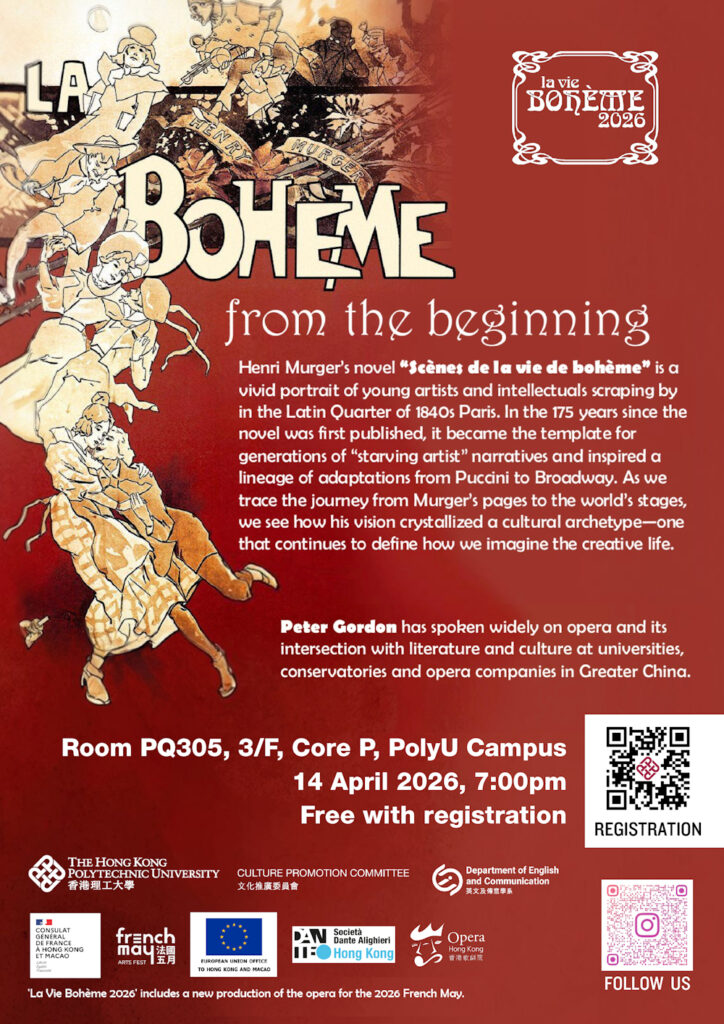
2027 is the 175th anniversary of Henri Murger’s iconic novel Scènes de la vie de bohème, a vivid portrait of young artists and intellectuals scraping by in the Latin Quarter of 1840s Paris. Murger’s stories shaped the modern myth of artistic rebellion and inspired a lineage of adaptations that carried his bohemians far beyond Paris and crystallized a cultural archetype—one that continues to define how we imagine the creative life.
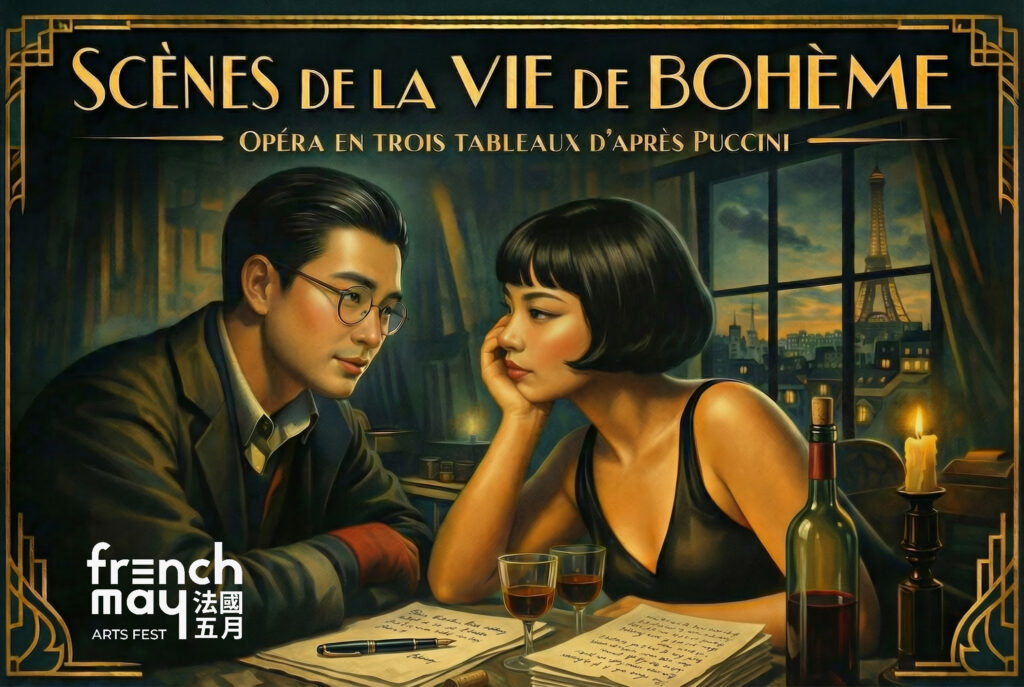
Performance at HK Polytechnic University, 30 May 2026
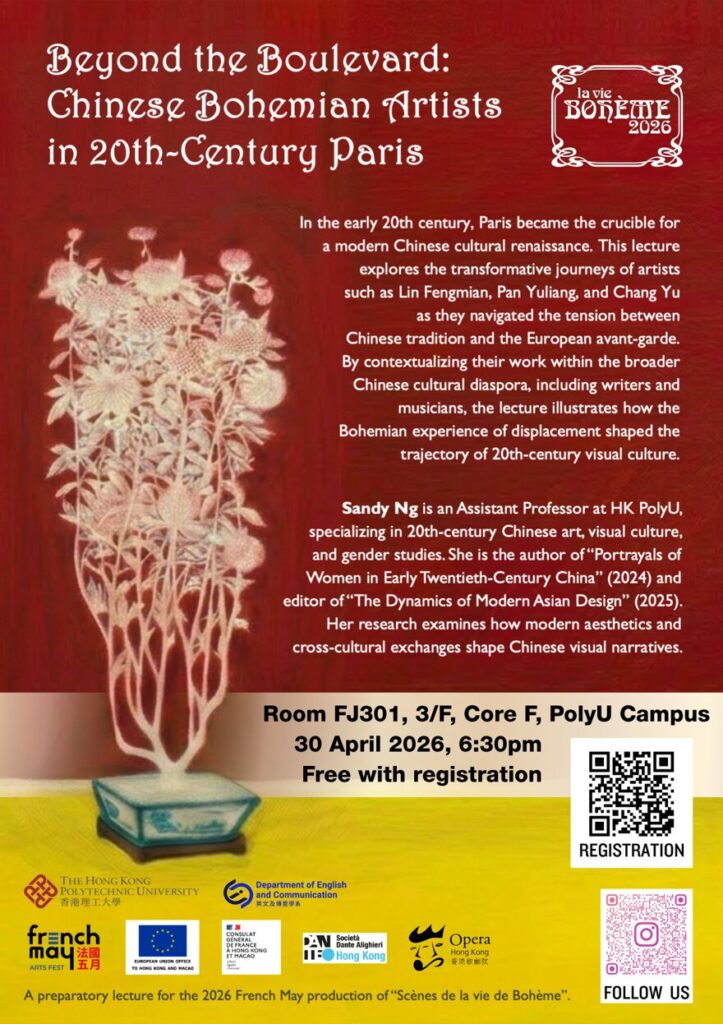
Among the many Chinese who found cultural and intellectual inspiration in Paris between the World Wars were a number of now well-known artists, writers and musicians: Sanyu, Lin Fengmian, Pan Yuliang, Li Jinfa, Xu Xu, Shao Xunmei, Xian Xinghai, Ma Sicong.
This story of impoverished artists, equal parts humour, romance and tragedy, happiness and sadness, tells a completely recognisable and relatable tale of a group of young people in the period of self-discovery between feckless youth and adult responsibility.
Echoing the classic French novel by Henri Murger, based on the iconic opera by Italian composer Giacomo Puccini and sung in French, Scènes de la vie de Bohème is an intimate dramatic adaptation of Giacomo Puccini’s classic opera. Reduced to the four principal roles, this new version is designed to focus on the emotional ties between the two couples while telling a story of the Chinese cultural diaspora in Paris: a story of love, loss, art, poverty and the richness of life.