Categories
Performances Productions

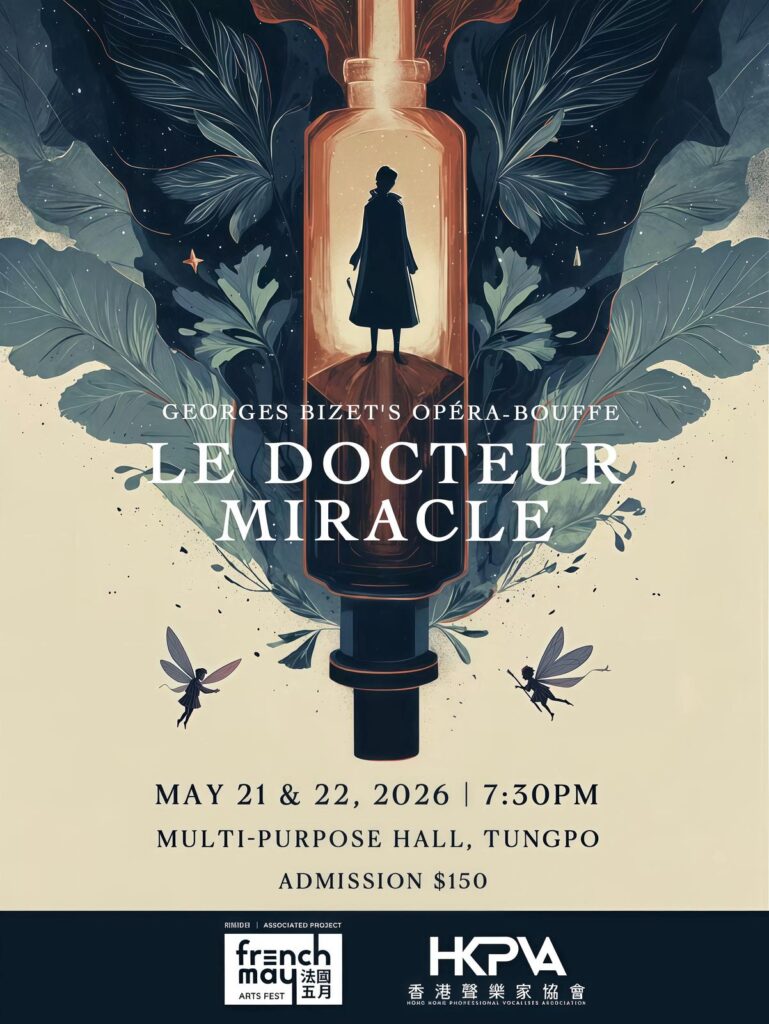
“Dr Miracle” to be performed at 2026 French May

The Hong Kong Professional Vocalists Association is performing the OperaLab’s “fairy-tale” version of George Bizet’s first opera Le Docteur Miracle as part of the French May Arts Festival and with the support of the French Consulate, featuring the new selections for children’s soloists and choir written by Marco Iannelli. It will performed on 21-22 May at Tungpo.

More operetta than opera, and only about an hour in length, Dr Miracle is a comedy that doesn’t take itself too seriously, yet still shows early evidence of the talent of the future composer of Carmen. It tells the timeless story of a young woman in love with a boy her overbearing father thinks unsuitable — only a doctor or lawyer will do — but, despite the attractions of a vain and flirty stepmother, love finds a way through various disguises, a poisoned possibly omelette, and a fake doctor with a miracle cure.

Categories
Artist activities Productions

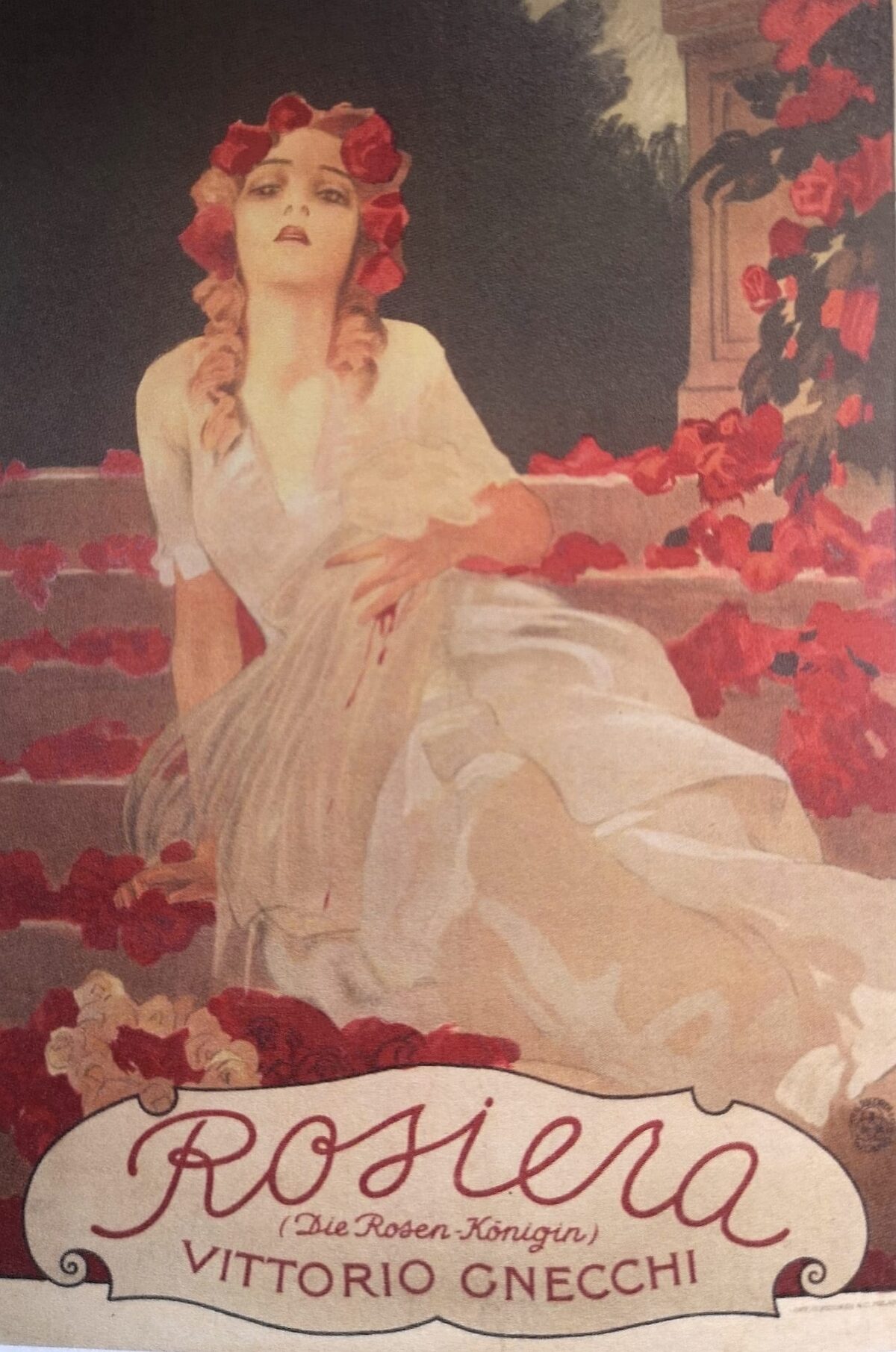
First performance in almost a century of “La Rosiera” by Vittorio Gnecchi Ruscone

For the 150th Anniversary of the birth of Milanese composer Vittorio Gnecchi Ruscone (1876–1954), soprano Denia Mazzola Gavazzeni and the Ab Harmoniae Onlus Association, in collaboration with Fondazione MIA of Bergamo and Serate Musicali of Milan, presented La Rosiera by Vittorio Gnecchi Ruscone, a three act opera based on a libretto by Carlo Zangarini. The performance of the restored first (1908) version took place on 26 January 2026 at the Giuseppe Verdi Conservatory, Milan.


At just nineteen, Vittiorio Gnecchi composed and staged the “azione pastorale” Virtù d’amore at the theatre of the family villa in Verderio, a work later published by Giulio Ricordi. Passionate about ancient tragedy, he then collaborated with Luigi Illica on the libretto for Cassandra, based on Aeschylus’s Oresteia, which premiered in Bologna in 1904 to great success under the baton of Arturo Toscanini. The triumph of Cassandra was followed by the first drafts of La Rosiera, a tragic idyll to a libretto by Carlo Zangarini,  inspired by Alfred de Musset’s novella On ne badine pas avec l’amour

The compositional style of La Rosiera, while employing post‑Wagnerian chromatic harmonies, remains rooted in classical forms, creating a narrative that rises from elegiac tones to tragic intensity.

The opera is set at the end of the 18th century. “Rosiera” is the nickname of Rosetta, an orphan, and adopted sister of Camilla and niece of the Baron of Salency. The Baron is determined to marry her to his son Perdicano. Rosetta, naive and simple, falls prey to Perdicano’s seduction, though his true love is Camilla, his cousin and childhood companion. Camilla, under the strict control of her governess Pluche, hides her growing feelings for Perdicano by deciding to enter a convent. Jealousy and passion ultimately drive her to betray her friend Rosetta. When passion finally erupts between Camilla and Perdicano, Rosetta, devastated, takes her own life by cutting her wrists with a sickle.

La Rosiera confirms Gnecchi’s sensitivity and profound literary and musical culture. Acclaimed in German‑speaking countries, he was unjustly forgotten in Italy, largely due to accusations of plagiarism involving Richard Strauss. When Strauss’s Elektra premiered in 1909, musicologist Giovanni Tebaldini noted similarities with Gnecchi’s Cassandra. The controversy proved deleterious only for Gnecchi, who was never able to clear his name.

La rosiera was not performed until 1927, some two decades after it was written, in Gera, Germany and is German as Die Rosenkönigin. After performances in Czechoslovakia, Vienna and the Netherlands, it finally received its Italian debut in Trieste in January 1931. There are no records of it having been performed publicly since the early 1930s.


A longtime admirer of Gnecchi’s harmonic and contrapuntal style, soprano Denia Mazzola was the first modern interpreter of Clitemnestra in Cassandra (Festival Radio France et Montpellier, 2000) and performed the Missa Salisburgensis (Lode in Musica per Santa Maria di Caravaggio, 2006). Her work aligns with the mission of the Ab Harmoniae Onlus Association, which she founded to revive unjustly forgotten musicians.

It was Mazzola Gavazzeni who invited composer and musicologist Marco Iannelli to restore and orchestrate the original 1908 version of La Rosiera, long considered lost. Iannelli, author of Il Caso Cassandra (Luigi Illica Prize, 2009), is a leading expert on Gnecchi’s music and serves as Artistic Director of the Vittorio Gnecchi Ruscone Musical Association.

Categories
Productions

“Carmen Wong” debuts in Shenzhen

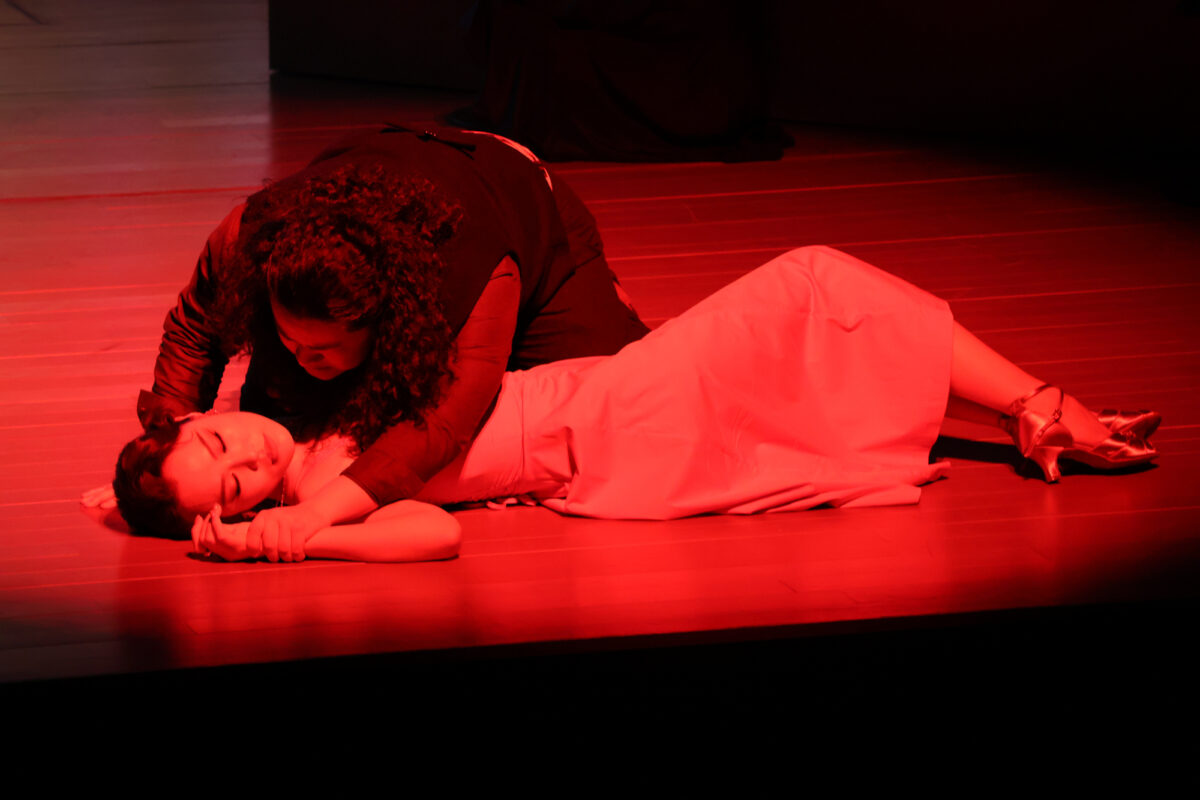
The full version of Carmen Wong, complete with new score for chamber ensembles, was performed three times with three different casts at the Shenzhen School of Music.

This new version for five singers is set over two scenes and set in a bar. Carmen, Micäela and Mércedès are bargirls; Don José is a police officer who stumbles upon a criminal operation run by the gangster Escamillo.

Categories
Artist activities Performances Productions

Holiday performances of “Le docteur Miracle” at Guangzhou Opera House

The Guangzhou Opera House closed out 2024 and welcomed in 2025 with four special performances of world-premiere production in modern-day Laurette travels to a French fairy-tale where all her dreams come true. Marco Iannelli conducted his new score which includes original music featuring resettings of familiar French children’s songs, and additional music by Bizet from his other operas “Don Procopio” and “Carmen”.

This four performances bring the total to 10 so far in the 2024-2025 season, almost certainly the longest run of Le docteur Miracle since its debut run of 11 performances in 1857. A further 13 performances are scheduled.

The set of “Le docteur Miracle”, Guangzhou
Children’s chorus
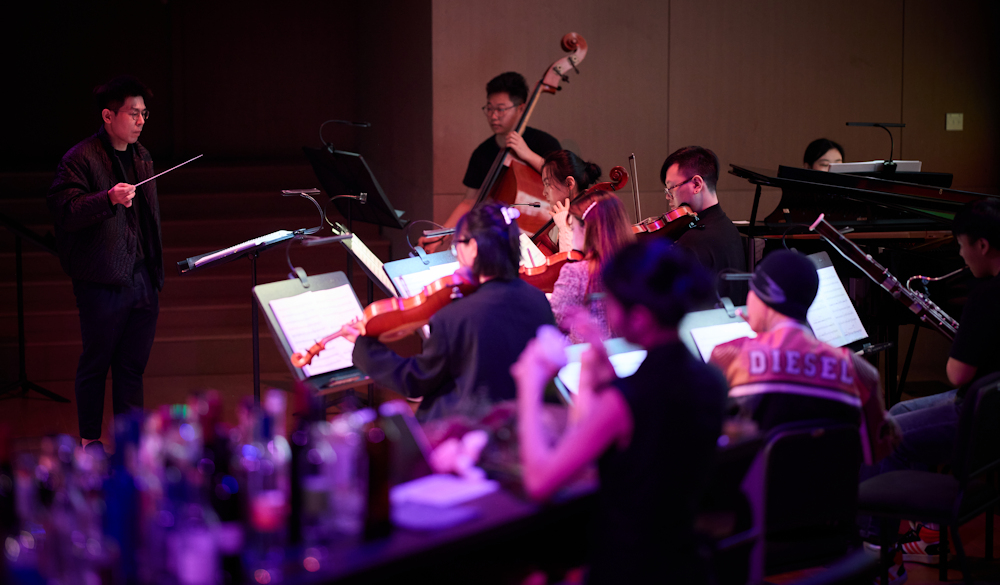
Marco Iannelli conducting
“Le docteur Miracle”, Guangzhou
The “Omelette Quartet”
“Le docteur Miracle”, Guangzhou
The arrival of Dr. Miracle

Categories
Artist activities

Marco Iannelli’s new arrangement for “Il tabarro”

Marco Iannelli’s new rearrangement for Il tabarro, the first of the three operas in Giacomo Puccini’s Il trittico, commissioned by Hong Kong’s Musica Viva, was played for three performances at the Hong Kong City Hall from 13-15 December 2024. The performances featured Turkish bass Burak Bilgili as Michele, the cuckolded barge-owner. He was joined by soprano Rianne Lau and tenor Yeghishe Manucharyan as the star-crossed lovers Giorgetta and Luigi.

Categories
Performances Productions

“Le docteur Miracle” premieres at the Guangzhou Opera House

For the Guangzhou Opera House, operalab reset Dr Miracle as a “fairy-tale opera”. Modern-day Laurette travels to a French fairy-tale where all her dreams come true. It has a new world-premiere arrangement by Marco Iannelli that includes original music featuring resettings of familiar French children’s songs, and additional music by Bizet from his other operas “Don Procopio” and “Carmen”.

“Dr. Miracle” : Guangzhou Opera House

According to Christophe Bagonneau, cultural attaché at the French Consulate in Guangzhou, “This year, Festival Croisements is celebrating in its own way the 60 years of diplomatic exchange between our two countries, and for this occasion it is taking the name ‘Croisements 60’. Born during the years of cross-fertilization between France and China, 2003 and 2004, what festival could, better than Croisements, commemorate these 60 years of cultural exchanges that have mutually enriched us.

“Bizet’s opérette, ‘Le Docteur miracle’, given this year by the Guangzhou Opera House, enriches the festival and is a fine example of this programming and of the cooperation between our two countries.”

According to producer Jenny Liang Lizhen: “‘Dr Miracle’ is the third immersive comic opera created by the Guangzhou Opera House. The production is supported by the French Consulate-General in Guangzhou and has been included in the culture programme celebrating the 60th Anniversary of the Establishment of Diplomatic Relations between China and France. The Alliance Française of Guangzhou has also provided French language coaching.

“In this third iteration of our immersive comic opera programme, we also further explored how to make the opera popular with contemporary audiences and promote the modernization, popularization and popularization of the art of opera. We aim to create an opera suitable for audiences of all ages, incorporating elements such as children’s chorus and ballet to attract family audiences to appreciate it together. However, although we use methods close to contemporary people to create a lifelike opera scene, what we always want to convey is the essence of opera, so that the audience can feel the original and classical ‘no amplification, direct sound’ nature of operatic singing.

“This time, we selected outstanding young opera singers from all over China to provide growth opportunities and a platform for up-and-coming talent interested in engaging in opera careers. 35 actors and musicians have participated in this production.”

The original domestic rom-com “Le docteur Miracle” features everything that might be found in a modern musical or TV sit-com: a pretty teenage girl with a crush, parents that don’t listen, humorous misunderstandings, disguises, plots … and a happy ending.

For this production, “Dr Miracle” has been reset as a “fairy tale opera”. Modern-day Laurette travels to a French fairy-tale where all her dreams come true. It has a new world-premiere arrangement for chamber ensemble by Marco Iannelli that includes original music featuring resettings of familiar French children’s songs (including “Ah! vous dirai-je, maman” — better-known as “Twinkle, twinkle little star”, “Frère Jacques”, “Au claire de la lune” and “Alouette”) for soprano and children’s chorus which, says Iannelli, “add some fairy-tale sparkle”. The new arrangement also interpolates additional music by Bizet from his other operas “Don Procopio” and “Carmen”. 

Iannelli continues: “By inserting French traditional tunes, and involving children, we open the gate to a fairy tale story that is quite far from the original ‘old’ opera. In my arrangement, I wanted to link this ‘new’ style (more magical and children-oriented) to the traditional operatic orchestral treatment. The last number, a new finale, is illustrative: starting with a magical lullaby, it melds almost naturally with themes from other arias, summing up not only the story, but the entire musical journey.”

  • Silvio/Romeo/Dr Miracle (tenor): Lin Junliang & Li Haojun
  • Laurette (soprano): Jiang Jiatian & Xing Xinyuan
  • Podestat (baritone): Liang Kaixuan & Xie Zhiwen
  • Veronique (mezzo-soprano): Su Kexin & Xiong Wenqin
  • Conductor: Zhu Chengcheng

Categories
Uncategorized

“Pomme d’Api” at the Peninsula Shanghai

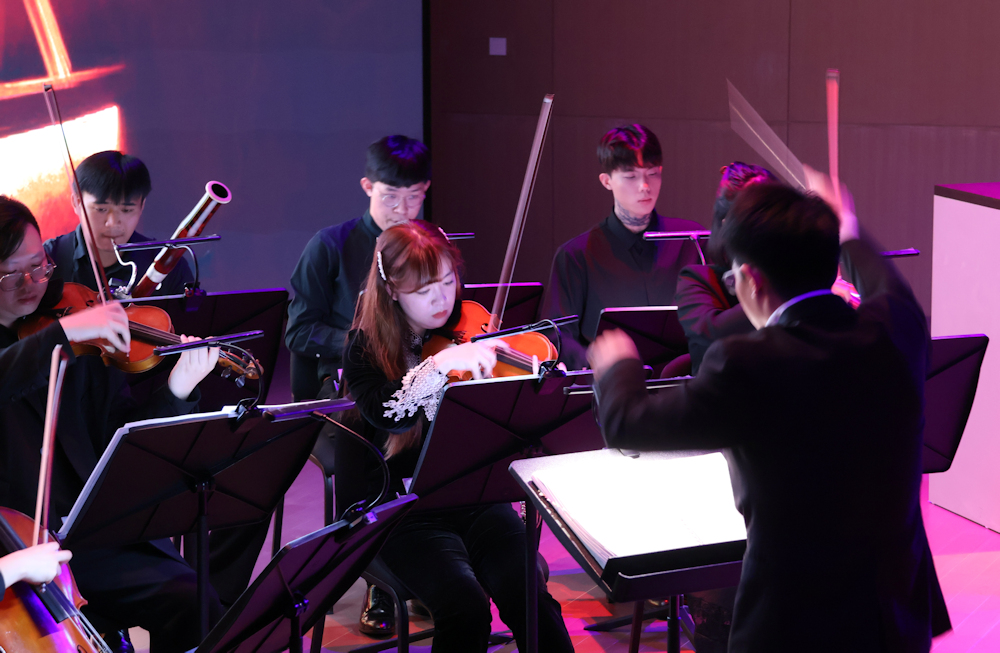
The Guangzhou Opera House traveled to Shanghai for two gala performances of “Pomme d’Api” at the Peninsula Hotel on 8-9 March 2024. The performances starred soprano Xing Xinyuan as Catherine, tenor Lin Junliang as Gustave, and baritone Song Luoyan as Rabastens. Chen Yiyan was the piano soloist while Jiang Yang conducted an chamber ensemble of musicians from Shanghai and Suchow orchestras.

Pomme d’Api at the Peninsula Shanghai
Categories
Artist activities

Marco Iannelli’s new score for chamber ensemble for “La finta giardiniera”

Marco Iannelli’s new chamber ensemble score for Mozart’s eighth opera La finta giardiniera, commissioned by Hong Kong’s Musica Viva, had a typhoon-delayed premiere on 2 September 2023 at the Hong Hong City Hall.

He wrote in the house programme:

“How does one dare ‘transcribe’ an opera written by Mozart?”, I said to myself when I’d been asked to “reduce” the original orchestral score for a new ensemble of just 15 musicians. But I couldn’t help myself: the challenge was more than intriguing.

“La Finta Giardiniera” is Mozart’s first opera written at an age most of us might consider adult, but still quite far from the “level” of the first of his operas that are still performed with regularity, “Die Entführung aus dem Serail”, written seven years later. Yet, from a musical perspective, the characteristics of Mozart’s style are all already discernible: along to his innate notable elegance, we already encounter the enchanting loveliness of straightforward melodies as well as simple but effective chord progressions.

These were qualities I needed to maintain, obviously. The challenge was in the instrumentation, or rather in the way Mozart created a quite unusual colour palette to highlight the psychological peculiarities of each character. The original instrumentation, in fact, kept changing according to the scene or the singer: oboes and horns in one aria; trumpets and timpani in another; or just strings in the next one. How was I to keep the same dynamic colourfulness within the size of a chamber orchestra?

I decided to select the wind instruments with the widest range (flute, clarinet and bassoon) while keeping the traditional string quartet, but boosting the role of the double bass. Then with a magnifier I began to dissect all of the original melodic lines, themes, effects, details and weave them in a new musical thread, made with exactly the same material, but meticulously reallocated to the new instrumentation. If before we had the power of trumpets or French horns, now we have the energy of bassoon and double bass; while flute and clarinet are in dialogue in the place of oboes.

But just as the dance figured in eighteenth-century ball rooms, also here the instrumental couples keep changing, following the drama and the comedy, feelings and personalities, giving back to the audience (hopefully) the same freshness and originality of Mozart’s creation.